

Understanding Heavy Work
A Pediatric OT’s Guide to Supporting Sensory Regulation Through Movement
As a pediatric occupational therapist, one of the most common recommendations I give to families, teachers, and caregivers is to incorporate “heavy work” activities into a child’s daily routine. Whether your child is neurodivergent (such as with sensory processing differences, autism, or ADHD) or simply has big energy and big emotions, heavy work can be a powerful tool to help them feel calm, focused, and in control of their body.
In this post, I’ll walk you through:
1. What heavy work is
2. Why it’s important
3. How to weave it into everyday routines
4. And how to use my Heavy Work Poster as an easy visual tool to get started!
What Is “Heavy Work”?
Heavy work refers to activities that engage the body’s muscles and joints through resistance and pressure. These movements provide proprioceptive input—a type of sensory input that tells the brain where the body is in space.
In simple terms, heavy work helps the body “wake up” or “calm down,” depending on what the nervous system needs. These activities often include pushing, pulling, lifting, squeezing, climbing, or carrying.
Examples of heavy work:
Pushing a laundry basket filled with stuffies
Carrying groceries
Doing animal walks (like crab walks or bear crawls)
Climbing on playground equipment
Wall push-ups
Jumping on a trampoline or playing hopscotch
Why Is Heavy Work Important?
Heavy work is beneficial for all children—but especially for those with sensory processing challenges, difficulty with self-regulation, or high activity levels. Here’s why it matters:
Calms the nervous system
Heavy work can be organizing and regulating, especially for kids who are feeling overstimulated or anxious. It can bring a sense of grounding and control.
Improves focus
When children get the sensory input their bodies need, they can focus better at school, during meals, or in therapy sessions.
Builds body awareness
Proprioceptive input strengthens a child’s sense of where their body is in space, which can help with coordination, balance, and motor planning.
Encourages self-regulation
Heavy work gives kids safe, productive ways to channel big emotions and energy. Over time, it helps build emotional awareness and regulation skills.
How to Incorporate Heavy Work Throughout the Day
You don’t need fancy equipment or extra time to make heavy work part of your routine. Here are a few easy ways to incorporate it naturally:
Morning Routine
Wake up the arms and legs with gentle squeezes
Pillow squishes while making bed
Animal walks out the door
After School
Create a safe space to jump and crash
Wheelbarrow walks between rooms
Outdoor fun (ie hopscotch)
Bedtime Wind-Down
Engage in deep pressure hugs
Push or carry a sack of their toys to ‘put to bed’
Gentle massage or compressions to arms and legs
How to Use the Heavy Work Poster
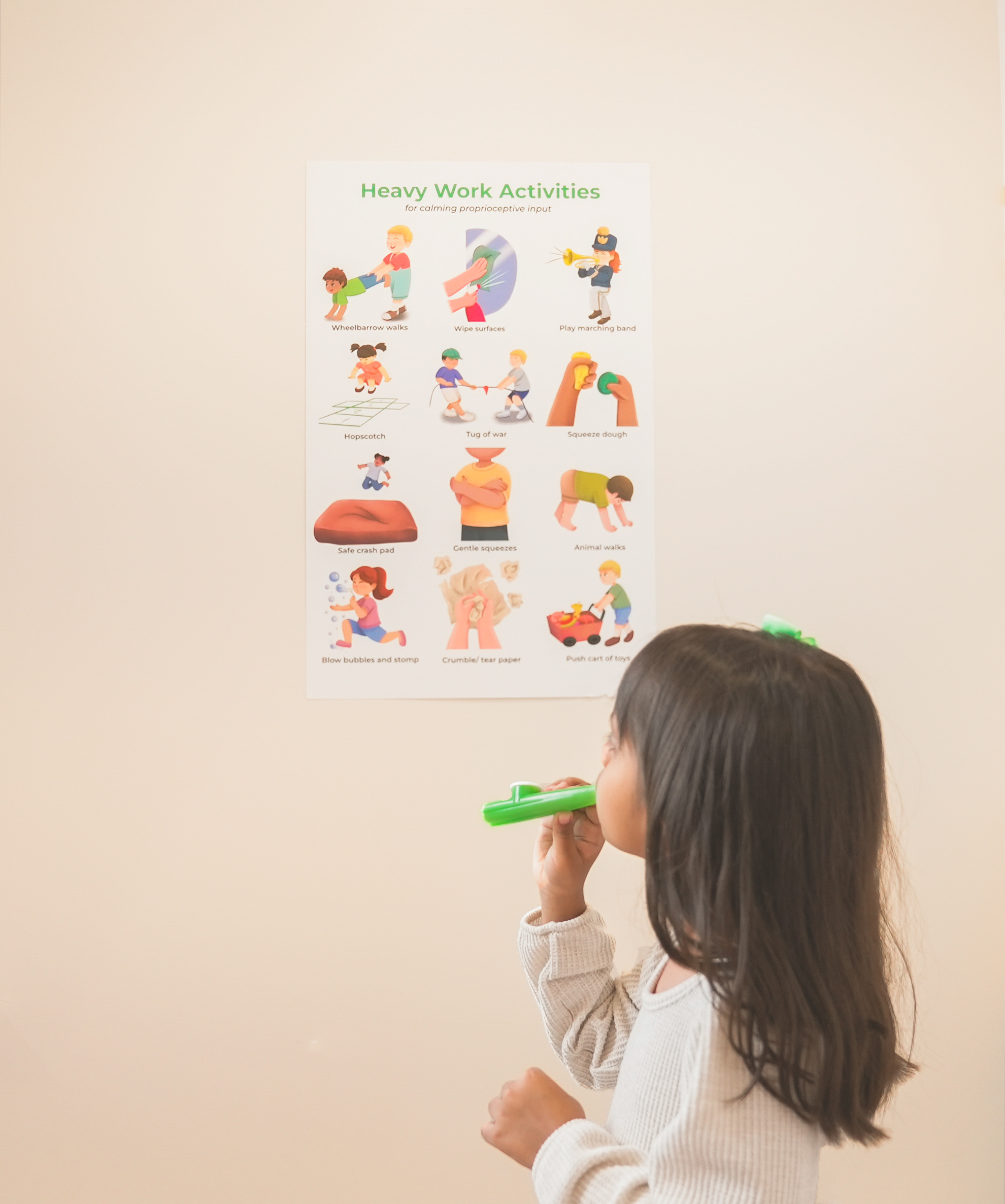
To make it even easier for families, therapists, and teachers to use heavy work consistently, I created a Heavy Work Activities Poster—designed specifically for kids! I’ve included my top favorite heavy work activities that have worked well with so many children and their families including but not limited to: gentle squeezes, wheelbarrow walks, wiping surfaces and more).
Keep in mind that not all activities would be suitable for every child. Help your child engage in the activities to find the ones they enjoy best. Then, during times of stressful transitions or times of needed movement, the poster will serve as a visual reminder as to which activities to engage in. Feel free to write on the poster or circle activities to help create your own personalized sensory routine.
More on how to use it:
Hang it in a visible space
Place it somewhere your child spends time—like the playroom, sensory corner, classroom, or even on the fridge.
Use it proactively
Don’t wait until your child is dysregulated. Choose a few activities from the poster before transitions, after screen time, or whenever your child needs to refocus. The more consistent you are, the more your child’s body will start to anticipate and benefit from the input. Try building heavy work into transitions or daily rhythms.
Let your child choose
Giving your child a sense of control helps them stay engaged. Ask: “Would you like to do crab walks or push the laundry basket today?” Although the poster offers twelve different heavy work activities, give them the option of a few (2-3) at a time.
Oral seekers
For children who tend to be oral seekers, or who enjoy added sensory input in their mouth such as biting, crunching, spitting or licking: try the heavy work activities that incorporate oral motor input (pretend marching band with an instrument or blowing bubbles while stomping).
Final Thoughts
Heavy work isn’t just a therapeutic strategy—it’s a powerful and natural way to help children feel more confident in their bodies and more regulated in their emotions. Whether you’re a parent, educator, or therapist, adding simple, consistent heavy work activities into your day can make a big difference.
The Heavy Work Poster is a great starting point to make these strategies more visual and accessible for your child. Use it daily, make it fun, and watch how it transforms your child’s ability to self-regulate.
This poster is the beginning to the sensory support products we plan to launch. Stay up to date by following our social media @seedsforspecialneeds for more product launch updates.